Sunday, November 22, 2015

Facebook has been banned : Censorship of Facebook

Censorship of Facebook has occurred because of the wide range of inflammatory posts present on the website; several countries have interfered with or banned access to it, including Syria, China, Iran and Bangladesh.
Source: Wikipedia.Com

Censorship by country

Bangladesh

The Awami League-led government of Bangladesh announced a countrywide ban on Facebook and other social network websites. Prime Minister Sheikh Hasina proposed the establishment of an Internet monitoring committee with the help of Bangladesh's intelligence services. Previously the government has been blocking websites. Right wing political parties and groups have been protesting blasphemous posts by bloggers that have resulted in 8 deaths at the time of the proposal. Blogger Ahmed Rajib Haider was stabbed to death on 15 February 2013. National riots over country's war crimes trials have killed 56 people between 19 January 2013 and 2 March 2013.
On 18 November 2015, the same Awami League govt banned Facebook again on the eve of the final judgement of Bangladesh Jamaat-e-Islami leader Ali Ahsan Muhammad Mujahid and Bangladesh Nationalist Party leader Salauddin Kader Chowdhury. Both the politicians and previous minister have been issued Sentenced of Death by the controversial War Criminals Tribunal and the review board of the Supreme Court of Bangladesh has finally given their judgement in favour of the previously given judgement.

China

In China, Facebook was blocked following the July 2009 Ürümqi riots because Xinjiang independence activists were using Facebook as part of their communications network. Some Chinese users also believed that Facebook would not succeed in China after Google China's problems. The popular Renren social network (formerly Xiaonei) has many features similar to Facebook, and complies with PRC Government regulations regarding content filtering.
As of 20 August 2013, there have been reports of Facebook being partially unblocked in China. But according to the "Blocked in China" website, Facebook is still blocked.

Egypt

As Egyptians took to the streets in 2011 in an attempt to overthrow the regime of Egyptian President Hosni Mubarak the government cut off access to a range of social media sites. As well as preventing protestors from using the likes of Facebook to foment unrest, many websites registered in Egypt could no longer be accessed by the outside world. Twitter, YouTube, Hotmail, Google, and a “proxy service” – which would have allowed Egyptians to get around the enforced restrictions- seemed to be blocked from inside the country.
Facebook was blocked for a few days in Egypt during the 2011 Egyptian protests.

Germany

In July 2011, authorities in Germany began to discuss the prohibition of events organized on Facebook. The decision is based on numerous cases of overcrowding by people who were not originally invited. In one instance, 1,600 "guests" attended the 16th birthday party for a Hamburg girl who accidentally posted the invitation for the event as public. After reports of overcrowding, more than a hundred police were deployed for crowd control. A police officer was injured and eleven participants were arrested for assault, property damage and resistance to authorities. In another unexpectedly overcrowded event, 41 young people were arrested and at least 16 injured.

Iran

After the 2009 election in Iran, the website was banned because of fears that opposition movements were being organized on the website. However, after four years of the blocking of Facebook website, as of September 2013, the blocking of both Twitter and Facebook was thought to have been lifted without notice. Iranians lost unrestricted access to Facebook and Twitter the next day, leaving many people wondering whether the opening was deliberate or the result of some technical glitch.

Mauritius

The Information and Communication Technologies Authority (ICTA) of Mauritius, ordered Internet Service Providers(ISPs) of the country to ban Facebook on immediate effect, on the 8 November 2007 because of a fake profile page of the Prime Minister. Access to Facebook was restored on the next day,

Morocco

On February 5, 2008, Fouad Mourtada, a citizen of Morocco, was arrested for the alleged creation of a faked Facebook profile of Prince Moulay Rachid of Morocco.

North Korea
Perhaps the most secretive country in the world little is known about internet access in Kim Jong-un’s nation. Although a new 3G network is available to foreign visitors, for the majority of the population the internet is off limits. But this doesn’t seem to bother many who, not knowing any different, enjoy the limited freedoms offered to them by the country’s intranet, Kwangmyong, which appears to be mostly used to post birthday messages.
As the people are forbidden from accessing non-authorized foreign media, Facebook is banned and access is forbidden in North Korea.

Russia

On August 1, 2014, Facebook blocked "a march for the federalization of Siberia" event page by request of the Prosecutor General. The event was planned for August 17 in Novosibirsk, a demonstration that organizers said would take place under slogans calling for Siberia to "stop feeding Moscow" and to "create a Siberian Republic" within Russia.

Syria

Syria, however, dealt with the Arab Spring in a different manner. Facebook had been blocked in the country since 2007 as part of a crackdown on political activism, as the government feared Israeli infiltration of Syrian social networking sites. In an unprecedented move in 2011 President Bashar al-Assad lifted the five year ban in an apparent attempt to prevent unrest on his own soil following the discontent in Egypt and Tunisia.
During the ban Syrians were still able to access Facebook and other social networking sites using proxy servers.

Tajikistan

In November 2012, Tajikistan blocked access to Facebook in response to comments posted online, spreading “mud and slander” about President Emomalii Rahmon and various other officials.

South Africa

In South Africa riots have occurred intermittently due to Facebook statuses of public figures or fake profiles created by media hungry social entrepreneurs and unknowing followers reading these posts. The government may have looked at regulation through existing broadcast media laws for ideas how to regulate the internet broadcasting in UTP packets. Causing SABC and ISPs to be linked.

United Kingdom

In the United Kingdom on April 28, 2011, the day before the Wedding of Prince William and Catherine Middleton, a number of politically motivated Facebook groups and pages were removed or suspended from the website as part of a nationwide crackdown on political activity. The groups and pages were mostly concerned with opposition to government spending cuts, and many were used to organize demonstrations in a continuation of the 2010 UK student protests. The censorship of the pages coincided with a series of pre-emptive arrests of known activists. Amongst the arrestees were a street theater group planning an effigy beheading performance in opposition to the monarchy, whose members included a 66-year-old professor of anthropology.

Cuba

Facebook isn’t officially banned in Cuba but it sure is difficult to access it.
Only politicians, some journalists and medical students can legally access the web from their homes. For everyone else the only way to connect to the online world legally is via internet cafes. This may not seem much to ask but when rates for an hour of unlimited access to the web cost between $6 and $10 and the average salary is around $20 getting online becomes ridiculously expensive. High costs also don’t equal fast internet as web pages can take several minutes to load: definitely not value for money for the Caribbean country.

Pakistan
Another case of posting cartoons online, another case of a government banning Facebook. This time Pakistan blocked access to the website in 2010 after a Facebook page, created to promote a global online competition to submit drawings of the prophet Muhammad, was brought to their attention. Any depiction of the prophet is proscribed under certain interpretations of Islam.
The ban was lifted two weeks later but Pakistan vowed to continue blocking individual pages that seemed to contain blasphemous content.

Vietnam
During a week in November 2009, Vietnamese Facebook users reported an inability to access the website following weeks of intermittent access. Reports suggested technicians had been ordered by the government to block the social networking site, with a supposedly official decree leaked on the internet (although is authenticity was never confirmed). The government denied deliberately blocking Facebook although access to the site today is still hit-and-miss in the country.
Alongside this, what can be said on social networking sites like Facebook has also become limited. Decree 72, which came into place in September 2013, prohibits users from posting links to news stories or other news related websites on the social media site.


Monday, October 19, 2015

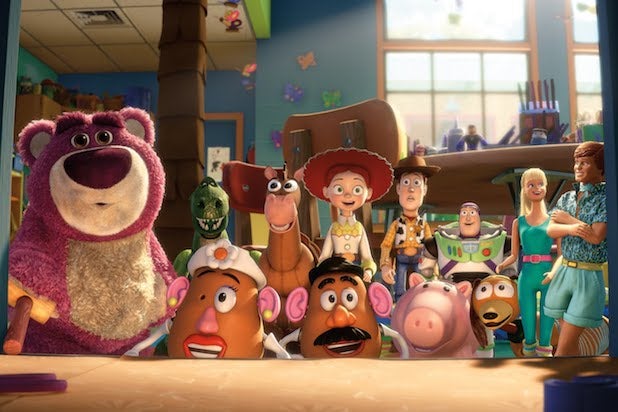
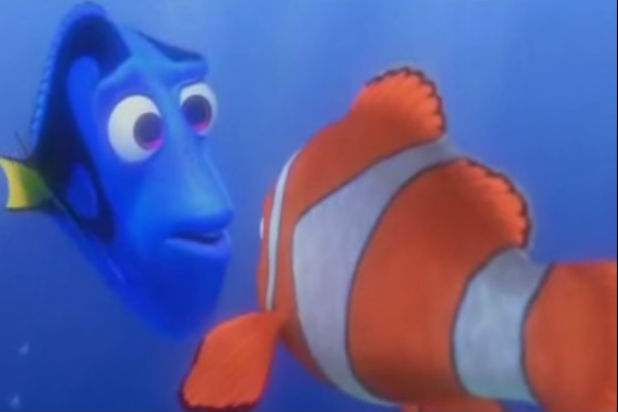
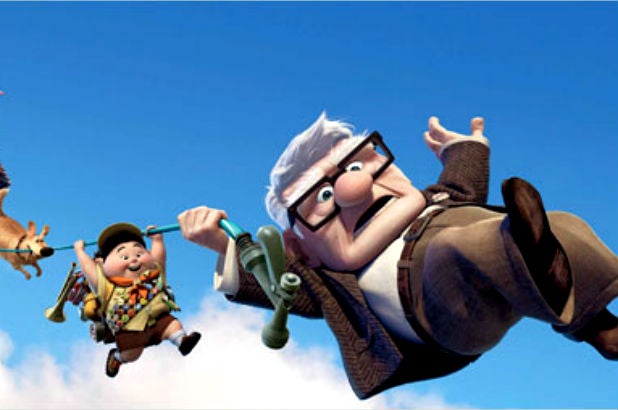
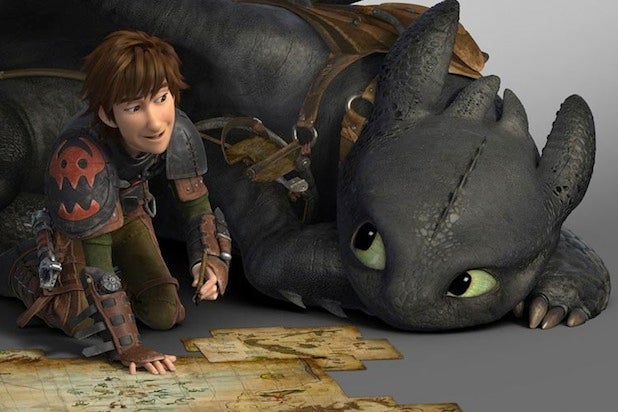
Best Funny/Cool Animated Movies of All Time


Minions


The Lion King


Toy Story


Frozen


Finding Nemo


UP


Kung Fu Panda 


Ice Age


Big Hero 6 


The Incredibles


Madagascar


Monsters

Walt Disney Studios 

Tangled


How to Train Your Dragon 


Ratatouille


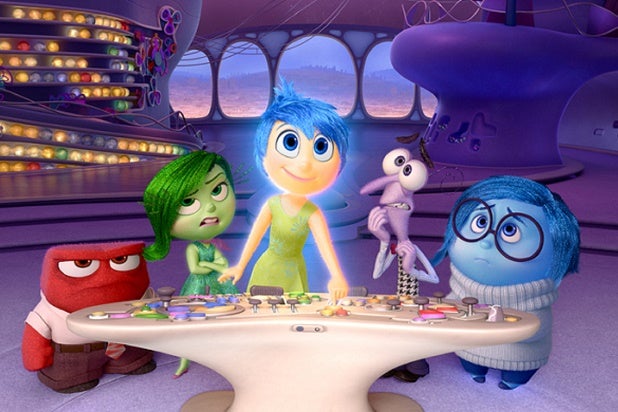
Inside Out

Fiona, Donkey, Shrek, Lord Farquaad are shown in the 2001 film  

Shrek


Despicable Me

Heavy smoking and drinking will age you faster

Photo: Reuters
Heavy smoking and alcohol use cause distinctive changes to human DNA, leading to an accelerated premature ageing, scientists reveal.

Interestingly, moderate alcohol use—about one to two drinks per day—was correlated with the healthiest ageing, while very low and high consumption were linked to accelerated ageing.

Biological ageing is the progressive decline in physiological ability to meet demands that occurs over time.

It is due to the accumulation of damage at the cellular level and the rate of biological ageing is determined by both environmental and genetic factors.

While calculating the difference between biological age and chronological age, the researchers found that all levels of exposure to smoke were associated with significantly premature ageing.

Using data from the publicly available “Gene Expression Omnibus”, Robert A Philibert from University of Iowa analysed patterns of DNA methylation - a molecular modification to DNA that affects when and how strongly a gene is expressed.

Prior research had shown that methylation patterns change in predictable ways as people age as well as in response to cigarette smoke and alcohol.

“Being able to objectively identify future smokers and heavy alcohol users when they are young can help providers and public health practitioners improve quality of life and reduce medical costs,” Dr Philibert emphasised.

The next step is to unravel the details of how methylation patterns change in response to lifestyle changes during the life course so that their assessments can be more informative.

The findings were presented at the American Society of Human Genetics (ASHG) 2015 annual meeting in Baltimore this week.

Sex change hormonal treatment reshapes brain chemistry

IANS. London |


Sex change hormonal treatment reshapes brain chemistry
Hormonal treatments administered as part of the procedures for sex reassignment can not only shift a recipient’s physical appearance to that of the opposite sex but also alter brain chemistry, says a new study.

The researchers showed that administration of the male hormone testosterone in female-to-male transsexuals raises brain levels of SERT, the protein that transports the chemical messenger serotonin into nerve cells.

In contrast, male-to-female transsexuals who received a testosterone blocker and the female hormone estrogen showed decreased levels of this protein in the brain.

SERT plays an important role in the treatment of mood and anxiety disorders.

“These results may explain why testosterone improves symptoms in some forms of depression. Our study also increases our knowledge on the role of sex hormones in sex differences of mood disorders,” said one of the researchers Rupert Lanzenberger from Medical University of Vienna in Austria.

Overall, these findings suggest that when people switch from female to male, their biology changes in a way that is consistent with a reduced risk for mood and anxiety disorders, whereas the reverse happens when males switch to females.

“This study is the first to show changes in brain chemistry associated with the hormonal treatments administered in the sex change process,” John Krystal, editor of the journal Biological Psychiatry where the study was published, said.

Lose Weight to avoid Cancer

IANS . London |


You should lose weight in case you are overweight in order to avoid cancer for a new study, which analysed data relating to more than five million people, has found links between obesity and cancer.

According to the study, published in the journal Lancet, more than 12,000 new cancers every year in Britain alone are associated with being overweight, Daily Mail reported.

Researchers found that for every five point increase in a person’s body mass index (BMI) they could be 62 percent more likely to be diagnosed with cancer of the uterus, and 25 percent more likely to develop kidney cancer.

“One of the ways being overweight increases the risk of cancer lies in the fact that excess fat doesn’t just sit around your middle doing nothing - it produces hormones, one of which is oestrogen,” weight-loss expert and NHS consultant Sally Norton was quoted as saying by the daily.

“After menopause, when the ovaries have stopped producing hormones, fat is the main source of oestrogen. This means that post-menopausal women who are overweight are at a greater risk of tumours that are stimulated by oestrogen,” she said.

Excess fat not only increases the risk of some breast cancers, it also renders treatment less effective.

“As many as 41 percent of womb cancers may be attributable to obesity,” said Norton.

In the case of males, being obese increases the chance of colon cancer.

“It is more likely in people with a higher waist to hip ratio and may be associated with increased insulin levels, seen in type 2 diabetes,” Norton said.

Around 10 percent of colon cancers are linked to obesity.

Another type of cancer, thought to be linked to being overweight, is liver cancer.

Most friends post Facebook pictures to make you Jealous

IANS . London |
Most friends post Facebook pictures to make you jealous. Photo: AFP Most friends post Facebook pictures to make you jealous. Photo: AFP 
Most friends post Facebook pictures to make you jealous. Photo: AFPIf you believe in that stunning picture of your friend on Facebook showing an amazing scenery or attending a luxurious party, take another look. Chances are that he or she may just be trying to make you jealous of their “good life”.

According to a new British survey done by smartphone maker HTC, almost everybody lies on their Facebook and Instagram profiles to look good.

“Over two thirds of us post images to our profiles to make it look like we’re more adventurous than we are,” the findings revealed.

Nearly 75 percents of people admitted that they judge their friends based on what they see on Facebook, Instagram or Snapchat, Mirror.co.uk reported.

The survey asked questions to 4,004 people between ages 16 and 54 across Britain, Spain, France and Italy.

Of 1,000 Britons who were surveyed, 52 percent said they posted pictures “purely to make their friends and families jealous”.

“From snaps of people’s homes to perfectly laid out outfit shots, every images counts and smartphone photography has never been more important,” Peter Frolund, HTC general manager (UK & Ireland), was quoted as saying.

“When it comes to why we feel a desire to share our public displays of possessions, it’s all about impression management,” behavioural psychology Jo Hemmings was quoted as saying in the report.

A recent study involving 400 men and women published in the journal Social Networking found that the more people changed their profile picture, the more likely they were to report narcissistic traits.

The study also looked at the time they spent on Facebook and the words they used to rate their profile pictures.

Saturday, October 3, 2015

Important Athlete Email Licked

Source: http://www.wodify.com/
American Athletic Name and Email Data Total in 148 Count


Athlete Name email
Alex Black uofoduck10@gmail.com
Alexander Vaughn ajv91@comcast.net
Alfredo Prieto wero_blue17@yahoo.com
Alvin Su alvinsu@asu.edu
Alyssa Higgins lyssa22ku@gmail.com
Andi Gross andreaggross11@gmail.com
Andi Pearson acpearso81@hotmail.com
Andrea Larson kenziesmom929@gmail.com
Anthony Marasa anthonymarasa@gmail.com
Anthony Vogel avogel2011@gmail.com
Ashlee Becker ahiltonbean20@gmail.com
Ashley Phillips anphillips05@yahoo.com
Austin Horton ahort3@live.com
Austin Olson austinolson75@gmail.com
Axel Roman r.gourmetur@yahoo.com
Beatriz Hernandez b.olvera11@gmail.com
Blanca Cons bcons@asu.edu
Bobby Fast Fingers robert.larivieretoug@gmail.com
Bryant Grimmius bryantg09@hotmail.com
Carolsina Searls carolsinasearls@yahoo.com
carressa padilla carressa.padilla@gmail.com
Catie Doris cdoris15@xaviergators.org
Charissa Bausch charissa.bausch@wsu.edu
Charles Romo 1cowboy292@gmail.com
Chris Olvey caolvey@gmail.com
Chris Wakeley cwakeley93@gmail.com
Chris Woodward chris2xu@gmail.com
Christopher Loo chrismikeloo@gmail.com
Cj Johnson cjann227@yahoo.com
Clay Taylor clay.a.taylor@gmail.com
Coby Cress coby.cress@gmail.com
Courtney Rainville cjrainville03@gmail.com
Cristina Machado rcdr05@me.com
Crystal Osorio crystal.osorio@gmail.com
D.K. Lawson dkae.lawson@gmail.com
Dalton Hall dalton_hall94@hotmail.com
Darwin Crawford darwin.crawford@gmail.com
David Dieffenbach daviddieffenbach@gmail.com
Derek mcdannald derekmcd89@gmail.com
Derrick Tutt dtutt@susd.org
diali avila diali.avila1@gmail.com
Drew Decker leeandru123@icloud.com
Edward Delima yanidelima@aol.com
Elena Barrientes elena.barrientes@gmail.com
Emma Hazlewood ekhazlew@asu.edu
Erin Hurst ehurst716@gmail.com
Ethan Becker ethanroyalbecker@gmail.com
Francisco castro castrox49@yahoo.com
Gabe Florio gabef21@hotmail.com
Guadalupe Valdez gvaldez0712@yahoo.com
Guillermo Ramirez Jr n2racin502@hotmail.com
Harrison Williams heweverett@gmail.com
Heather Evans heather.margaret.evans@gmail.com
Hilary Lewis hilarymlewis@yahoo.com
Hugh Bach hubacha@yahoo.com
J. Israel Armendariz jiarmend@asu.edu
Jeff Moegling jmoegling@hotmail.com
Jenna becko jennabecko@yahoo.com
Jeremy Ford ford.jeremy@gmail.com
Jeremy Templeton jerbear152@gmail.com
Jessica Bosak jessicakasob@hotmail.com
Jessie Breternitz jbreternitz@paleowest.com
Jessie Christensen jessiechristensen11@gmail.com
Joe Kohn jdkohn16@gmail.com
Joel Pliskin defendingchampion@gmail.com
John Buchanan JVBuchanan92@gmail.com
John Williams j121williams@gmail.com
Jordan Bosin jbosin@asu.edu
Joshua MCGEHEE mcgehee.joshua@gmail.com
Justin Meeks justinwmeeks@gmail.com
Justin Pilch pilch55@gmail.com
Karely Castiller karely2255@yahoo.com
Keith Reinhardt kdreinhardt10@gmail.com
Kelsey Stopkey kjstopkey@gmail.com
Kevin Murphy kemurph4@asu.edu
Kiel Siler kielmsiler@gmail.com
Kinita Albertson kinita.albertson@gmail.com
Kira Luke kirnawil@gmail.com
Krist Rouypirom pondoc416@gmail.com
Kristie Dixon woohdah12@gmail.com
Krystie Reeves krystie.reeves.kr@gmail.com
Kumar Pulipati adarsh498@gmail.com
Laura Suarez romancechick20@gmail.com
Lauren Skahan lauren.e.skahan@gmail.com
Lauren Tomlin laurentomlin93@yahoo.com
Lizzie Kazan lizziekazan@gmail.com
Madison MacDonald madancer7@gmail.com
Manuel Delgado delgado.sr03@yahoo.com
Manvi Kosuru manvi.se@gmail.com
mara arrieta mandjsaving@gmail.com
Mariana Madrid mariana.madrid.13@gmail.com
Marisa Lopez asiramzepol14@gmail.com
Marshall Westbrook mwestbrookjr@gmail.com
maryn hardison maryn.hardison@gmail.com
Matt mcfarlane mattem499@gmail.com
Matthew Beversdorf mabeversdorf@gmail.com
Matthew Zweig mattszweig@gmail.com
Michael Larson molarson23@gmail.com
Michael Mowry michael.mowry@stellence.com
Michael tachera tachera89@gmail.com
Michael Trayser mtrayser167@g.rwu.edu
Michelle Byers michellebyers_rn@yahoo.com
Monica Idstein midstein@atsu.edu
Nate Mcneill ntmcneill@gmail.com
Nathan Cooper nrcooper5@gmail.com
Neal Lin neal_lmw@hotmail.com
Nick Donoghue ndonoghue19@gmail.com
Nick Mercer neeko@nwi.net
Nicole Dillaway nchavarry22@gmail.com
nicole schell nharguindeguy@yahoo.com
Nidia Yepiz nidia.yepiz@gmail.com
Niki Trinidad nikitrini@att.net
Paul Dillaway dway3304@yahoo.com
Paul Salinas paul12104@hotmail.com
Peter Klein pmklein93@optimum.net
Pranav Dobhal PDobhal@asu.edu
Rachel Giroux rgiroux@asu.edu
Rashad Scott shadscott34@gmail.com
Ricky Valdez rivaldez74@gmail.com
Robbie Weinstein Robbie.Weinstein@gmail.com
Rochelle Prins rochelleprins@gmail.com
Russell Cooper cooperruss64@gmail.com
Ryan Lane ryan@ryanalane.com
Ryan Mattson rdmattso@asu.edu
Ryan sablan rsavrinc@gmail.com
Sarai Acosta sarai.acosta89@gmail.com
Sean Conway sconway12345@gmail.com
Shawn D Mahrenholz shawnmahrenholz@yahoo.com
Stephanie Edwards 1supergirl1998@gmail.com
Stephany aguila stephanydelaguila@gmail.com
Steve Daniels stevetdaniels@gmail.com
Steven Freeman sfree79@gmail.com
Subbu KALAGA VENKATA subbu.hcu.06chms28@gmail.com
Taryn Pratt taryn.e.pratt@gmail.com
terry harbeck e2digger@hotmail.com
Tim Blanckaert cc_20_0@hotmail.com
Tim Gentry tgent07@gmail.com
Tim Gilman t.gilman3@gmail.com
Timothy Luke tjluke90@gmail.com
Tranquelino Romero mymassageaz@gmail.com
Tyera Zweygardt tzweygar@asu.edu
Tyler Loper tloper517@gmail.com
Tyler Nachtman tylernachtman@gmail.com
tyler robles taroble1@asu.edu
Venus Kelly venus.kelly@gmail.com
whitney tucker whitney.n.tucker@gmail.com
Will Hurst will@crossfitblackstorm.com
Zach Moore zachm43@gmail.com